There’s a phrase being echoed across South Carolina right now—
a phrase that sounds good, feels good, and reads even better in a press release:
“The comeback starts today.”
And on paper, it’s hard to argue with the momentum.
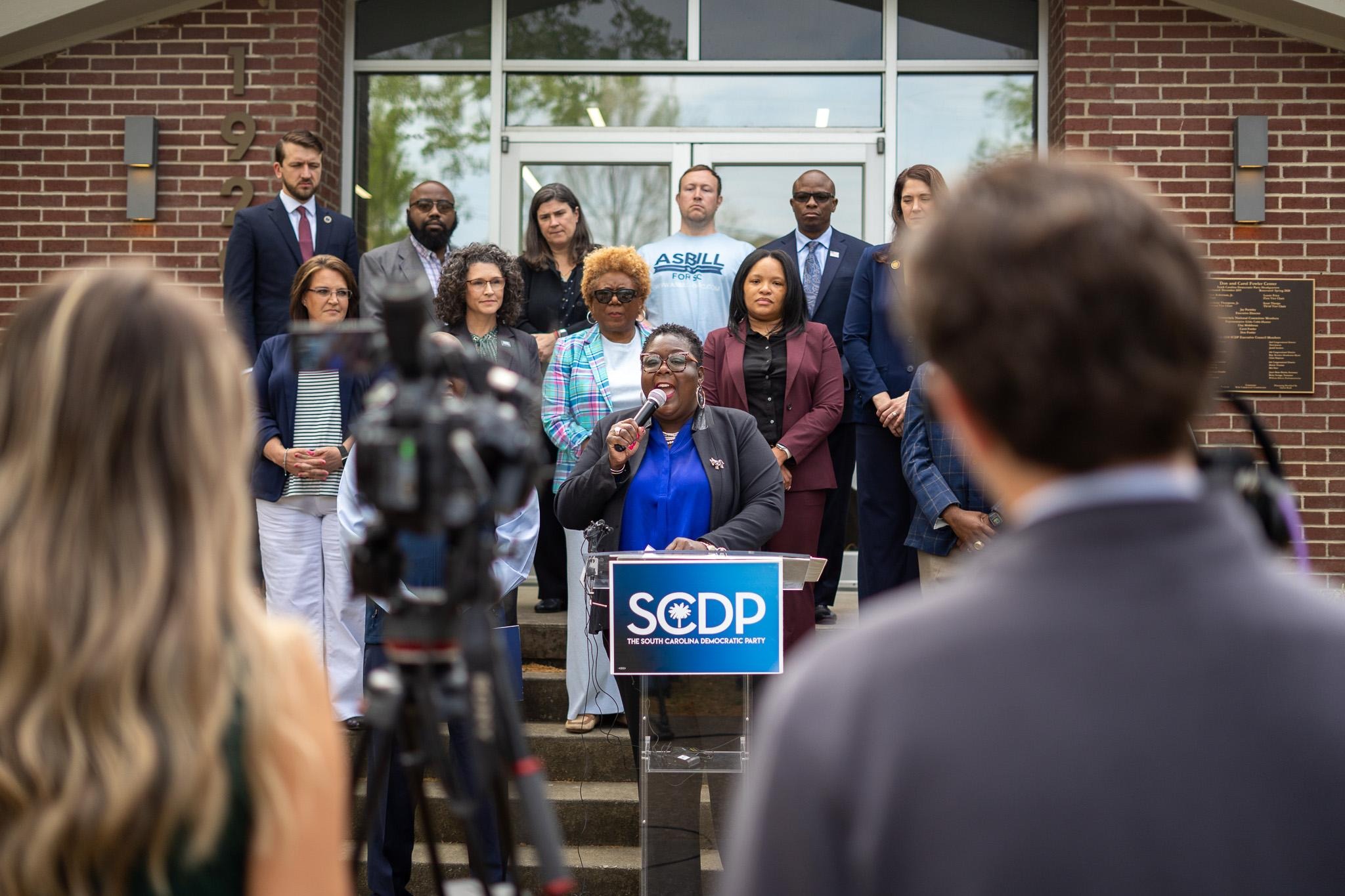
For the first time in more than a generation, Democrats have filed candidates in all 124 State House districts, with 159 total candidates stepping forward. Republicans, by comparison, filed 139 candidates across 104 districts.
That’s not just a statistic—that’s a statement.
But in South Carolina politics, we’ve learned something over time:
Statements and outcomes don’t always move in the same direction.
A State Defined by Imbalance
Let’s ground this conversation in reality.
Right now, Republicans hold 88 seats in the South Carolina House compared to just 36 for Democrats. (South Carolina Legislature Online)
That’s not just a majority—that’s control.
In fact, Republicans currently hold a supermajority, giving them the power to shape legislation, override vetoes, and set the tone of governance across the state. (Wikipedia)
And this isn’t new.
South Carolina has been under sustained Republican control for decades, with Democrats steadily losing ground since the late 20th century—a reversal from a time when Democrats once dominated the legislature entirely. (Wikipedia)
So when we hear “historic filing numbers,” we have to ask a harder question:
Historic compared to what—and meaningful toward what?
What This Moment Actually Means
Let’s be clear—this is not nothing.
Filing candidates in every district does three important things:
- It restores presence
You can’t win where you don’t compete. For years, Democrats left districts uncontested. That’s not strategy—that’s surrender. - It builds a bench
Today’s long-shot candidate can become tomorrow’s viable contender. That’s how political ecosystems are rebuilt. - It signals organizational life
A party that can recruit 159 candidates is not dead—it’s active, engaged, and at least attempting to reintroduce itself to voters.
And that matters.
Because politics, at its core, is about showing up.
But Here’s the Part Nobody Wants to Say Out Loud
Filing is not winning.
And competing is not the same as contending.
The gap Democrats are trying to close isn’t six seats.
It’s structural.
It’s cultural.
It’s geographic.
It’s historical.
Yes—Democrats need six seats to break the supermajority.
But breaking a supermajority is not the same as taking control.
It simply means:
- Republicans lose unilateral power
- Negotiation becomes necessary
- The conversation changes… slightly
That’s progress.
But it’s not a comeback.
The Gerrymandering Question Nobody Can Ignore
The press release mentions 30 years of gerrymandering, and whether you agree with that framing or not, the reality is this:
District maps matter.
Research has shown that redistricting can significantly distort electoral outcomes, sometimes producing results that don’t fully reflect the will of the voters. (arXiv)
So when Democrats say “compete everywhere,” what they’re really saying is:
“We’re stepping into districts that were never designed for us to win.”
That’s not just politics—that’s uphill politics.
A Groundswell… or a Starting Point?
The Comeback SC is framing this as a “groundswell.”
And maybe it is.
But here’s the more grounded interpretation:
This is not the comeback.
This is the re-entry.
For years, Democrats in South Carolina have struggled with:
- Candidate recruitment
- Rural engagement
- Message alignment
- Infrastructure
This filing surge doesn’t solve those problems.
It acknowledges them.
The Real Test Is November
This moment—this announcement—this energy…
It all leads to one question:
Can these candidates win?
Not just in Columbia.
Not just in Charleston.
Not just in the usual pockets.
But in the districts that have gone untouched… unchallenged… and, frankly, unwon.
Because history tells us:
Momentum without conversion is just noise.
So… Is This a Comeback?
That depends on how you define the word.
If a comeback means:
- Showing up again
- Rebuilding infrastructure
- Recruiting candidates
- Re-engaging voters
Then yes—this is the beginning of one.
But if a comeback means:
- Flipping seats
- Breaking long-term control
- Changing legislative power
Then we’re not there yet.
Not even close.
Final Word
There’s something admirable about what’s happening here.
It takes belief to step into races you’re expected to lose.
It takes discipline to rebuild something that’s been declining for decades.
But belief alone doesn’t change outcomes.
Execution does.
November will tell us whether this was:
The start of a comeback…
or simply a well-organized attempt to begin one.