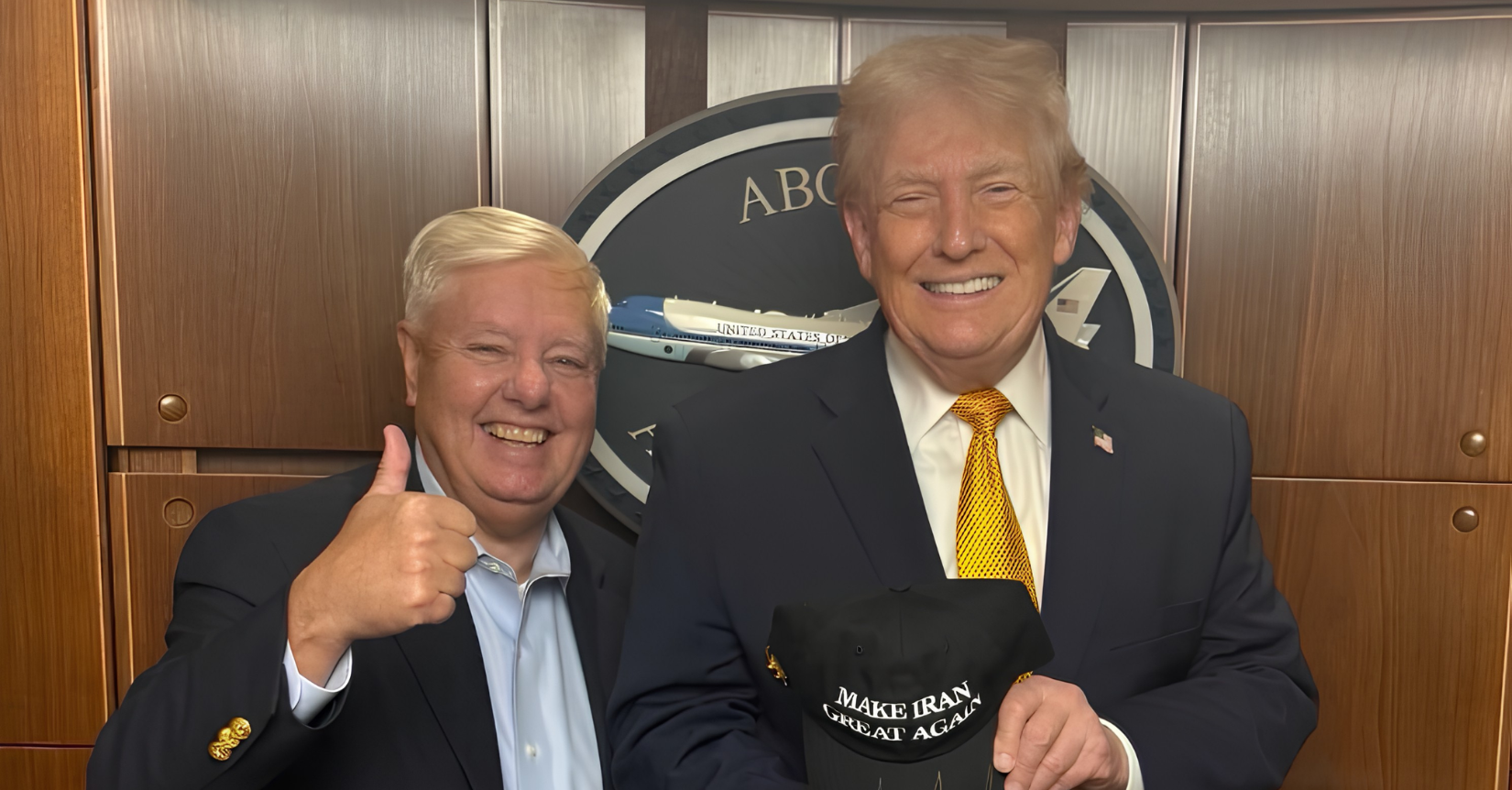
For years, Senator Lindsey Graham has remained one of the most recognizable and controversial political figures in South Carolina politics. Critics on both the left and right have questioned his political evolution, his close relationship with President Donald Trump, and his shifting positions over the years. Yet despite those criticisms, Graham continues to demonstrate a political reality that many opponents struggle to overcome:
He has built one of the strongest political infrastructures in South Carolina.
Recent polling highlighted in a Newsweek report suggests Graham remains the overwhelming favorite in the Republican primary race for his Senate seat. According to polling conducted by InsiderAdvantage, Graham maintains a commanding lead over his Republican challengers, benefiting from high statewide name recognition, strong institutional support, and the endorsement of Trump. Pollster Matt Towery noted that Graham led across nearly every major demographic category among Republican voters.
While South Carolina voters may hold differing opinions about Graham personally, his political durability has become increasingly difficult to ignore.

A Political Survivor in a Changing Republican Party
Graham’s longevity in politics is notable because he has survived multiple ideological eras within the Republican Party.
Early in his Senate career, Graham was often associated with more traditional conservative figures such as the late Senator John McCain. He supported bipartisan immigration reform, spoke openly about foreign policy, and at times publicly criticized Trump during the 2016 presidential campaign.
However, after Trump’s rise reshaped the Republican Party, Graham recalibrated politically. Over time, he became one of Trump’s closest Senate allies, defending the former president during impeachment proceedings and aligning himself closely with the MAGA movement.
For some critics, that transformation represented political opportunism. For supporters, it demonstrated political adaptability.
Regardless of interpretation, the shift helped Graham preserve his standing inside a Republican electorate increasingly dominated by Trump-aligned voters.
The Importance of Political Infrastructure
Political analysts often focus heavily on polling numbers and campaign messaging, but long-term electoral success frequently depends on infrastructure — the behind-the-scenes network that keeps campaigns competitive year after year.
Graham’s political strength extends far beyond television appearances or social media attention.
His infrastructure includes:
- Deep relationships within the national Republican Party.
- Longstanding donor networks.
- Strong ties to conservative media and advocacy organizations.
- Institutional support from Republican leadership.
- Extensive campaign fundraising capabilities.
- Established voter turnout operations across South Carolina.
These structural advantages make Graham especially difficult to challenge, even during periods when his approval ratings fluctuate.
Incumbency itself also provides advantages. As a senior senator with decades of experience, Graham has developed relationships across federal agencies, party committees, and political organizations that newer challengers simply do not possess.
In modern politics, organization often matters just as much as enthusiasm.
Why Challengers Face an Uphill Battle
Although Graham has drawn criticism from both conservative and moderate factions at different points in his career, no challenger has yet demonstrated the combination of fundraising, statewide organization, and political influence necessary to seriously threaten him.
Republican primary challengers have often struggled with:
- Limited statewide recognition.
- Weak fundraising infrastructure.
- Lack of institutional endorsements.
- Minimal voter outreach operations.
Meanwhile, Democratic challengers face broader structural challenges in South Carolina, a state where Republicans have dominated statewide elections for decades.
In 2020, Democrat Jaime Harrison raised historic amounts of money and generated national attention during his Senate race against Graham. Despite that momentum, Graham still won comfortably by roughly 10 percentage points.
That race demonstrated an important political lesson: fundraising alone does not necessarily overcome entrenched political networks and long-established voter coalitions.
Trump’s Influence Remains a Major Factor
Former President Donald Trump continues to play a major role in Republican primary politics, and Graham’s alliance with Trump remains one of his most valuable political assets.
Trump’s endorsement carries significant influence among South Carolina Republican voters, particularly in a state where Trump remains highly popular within the GOP base.
For many Republican voters, Graham’s close relationship with Trump has helped neutralize previous skepticism about his ideological consistency.
That alliance also strengthens Graham’s national fundraising network and media visibility, both of which reinforce his broader political infrastructure.
The Reality of Modern Incumbency
In today’s polarized political climate, incumbents with strong institutional backing are increasingly difficult to remove from office.
Political campaigns are no longer won solely through debates, advertising, or viral moments. They are won through:
- Data operations.
- Donor relationships.
- Ground game organization.
- Media ecosystems.
- Coalition maintenance.
- Voter turnout infrastructure.
Graham’s political operation reflects all of those components.
While opponents may continue to challenge his positions or political evolution, the larger reality is that Graham has spent decades building a statewide and national political machine designed for survival.
And so far, that infrastructure continues to work.
Final Thoughts
Lindsey Graham’s continued dominance in South Carolina politics is not simply the result of personality, media attention, or partisan loyalty. It is the product of a carefully maintained political infrastructure built over decades inside both South Carolina and national Republican politics.
That infrastructure — combined with incumbency, fundraising strength, and Trump’s continued influence within the Republican Party — makes Graham one of the most politically protected senators in the country.
Whether voters view that as political effectiveness or political entrenchment largely depends on perspective.
But one thing remains clear:
Defeating Lindsey Graham requires far more than criticism or enthusiasm. It requires overcoming an entire political system built to keep him competitive.